Barefoot Yoga’s Inspiring Teacher of the Month:
Farzaneh Noori

Farzaneh NooriOur teacher of the month for July is Farzaneh Noori, co-founder of Yoga House in Pasadena, California. She has been practicing and teaching yoga for over 20 years, and has studied with a number of influential yogis in the process, including Tias Little, Paul Grilley and Jill Miller. She focuses strongly on the healing properties of yoga, and some of her most popular classes include Prenatal Yoga and Therapeutic Yoga for Cancer.

Farzaneh began her Therapeutic Yoga for Cancer classes in 2012. After her own cancer diagnosis and treatment, she attributed her recovery in a large part to the practice of yoga, and wanted to share its healing benefits with others coping with the disease. The classes are offered free of charge as a service to the community, and over time attendance has blossomed from a few participants to 20 or 30 per class. According to Yoga House’s website, “Each class offers a synthesis of several natural healing modalities: restorative yoga; gentle yoga; breath work; meditation; and hands-on healing, all of which promote a state of deep relaxation which enhances the body’s ability to heal itself.”

Yoga House was co-founded by Farzaneh Noori and Bruce Schwartz in 1997 and they’re a valued long-time customer of Barefoot Yoga, offering our yoga mats, bags, eye pillows and more. To experience Farzaneh’s inspiring and healing classes for yourself, visit Yoga House in Pasadena!

Posted under Health and Fitness, Yoga Studios, Yoga Supplies, Yoga Teachers

This post was written by Lauren on July 24, 2014
Demystifying Mula Bandha


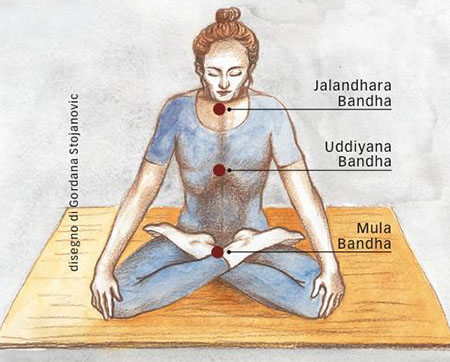
Mula Bandha

Mula in Sanskrit means ‘root’, ‘base’, ‘foundation’, ‘beginning’, ‘origin.’ Bandha means ‘catching hold of’, ‘fetter’, ‘bondage.’ Mula Bandha, or root lock, is one of four bandhas mentioned in the Hatha Yoga Pradiprika and the Gheranda Samhita. The root refers to the pelvic floor or more precisely, the perineum. It is not the muscle that is the sphincter or those you use to hold your bladder. It is in between these two muscles.

Mula bandha allows us to lock the prana or life-giving breath in our body and move it up our central system. Mastering the locks allows us to the master of our practice in our physical body as well as our inner mind. Mula bandha aids is holding poses for long periods of time, transitioning to new asanas, steady concentration, controlled breath and a calm and clear mind.You are advised to hold mula bandha throughout your practice and that might be challenging at first but with practice, it will get easier.

To activate Mula Bandha, exhale and engage the pelvic floor. You might contract the muscles around the anus and genitals at first, but try to isolate the muscles between those 2 areas. You want to draw up the perineum and to the back of your spine. Do not hold your breath.

Engaging Mula Bandha forces your energy to flow up and not down and out. This gives you a ‘light’ feeling, making your limbs limber and thus lighter on your mat. This also helps you from fatiguing during long holds on poses. Mula Bandha stimulates the pelvic area, genitalia, the endocrine and excretory systems and relieves depression and constipation.

For yoga supplies to help with your practice, visit www.barefootyoga.com!

Posted under Health and Fitness, Styles of Yoga

This post was written by Grace on July 21, 2014

Top 5 Tips for Your First Yoga Class

Excited for that first class but don’t know quite what to expect when it comes to etiquette? Check out our list of do’s and don’ts below to get in the know!

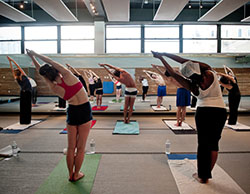
Yoga Class

1. Try to get there about 10-15 minutes early (and don’t be late if you can help it!), and once you’re there, stay for the whole time. It’s disruptive to others to get up and go before you’ve gotten your Savasana in.

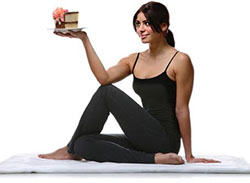
Cake

2. Don’t eat for 2-3 hours before class! This is an important one, even more so than the old “wait an hour after eating to go swimming”. If you eat too soon or too much before class, it’s possible you’ll experience nausea, cramps, or even vomiting (especially in a pose like prayer twist!)

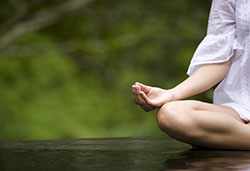
Intention

3. Create an intention. Creating an intention before class and holding it during can help keep you centered and focused. Your intention can be anything from aiming to be more compassionate or kind to simply intending to be in the moment and not let your mind wander to what the next days holds. After class, reflect on both what you learned and how you feel. Awareness and reflection is key, in both expanding your practice and your mind.

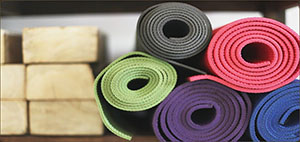
Class Props

4. Treat studio props with care and respect. After class, pick up and neatly put them away for the next yogi to use.

Savasana Cat

5. Be kind and gentle to yourself; don’t push it. Listen to what your body tells you and don’t strive for that perfect warrior pose if you’re body says no. It’s also helpful to let your teacher know about any injuries so they can help you find what works for you.

Need to stock up on some props before that first class? Come visit us at BarefootYoga.com to find everything you need!

Posted under Health and Fitness, Yoga Studios, Yoga Supplies

This post was written by Carolina on July 17, 2014